
BOSIET Course Syllabus Breakdown: What You’re Actually Paying For
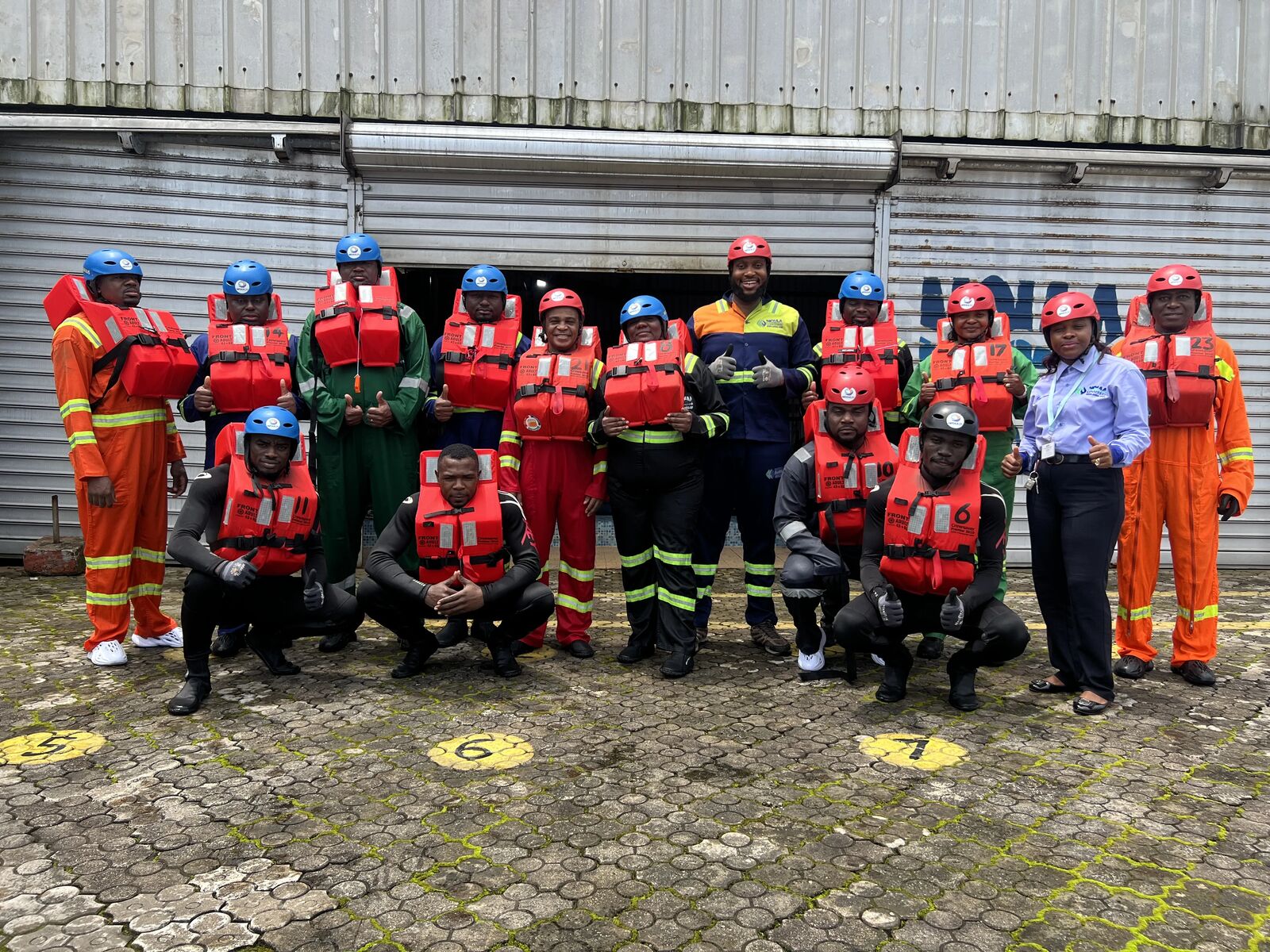
In the world of Offshore training, most BOSIET Course syllabus online only tell you the module names. Nothing else.
You see no real hours. No ratios. Nothing you could actually put in front of an ops director or an auditor and say, “here’s what we’re paying for.”
That’s not enough when you’re the one signing off on the budget.
NOIAA LTD is OPITO-approved for BOSIET (course code 5700), and this breakdown comes straight from our internal course documentation, which is approved by OPITO.
In this article, we will look at the modules from OIS-01 through OIS-04, hour by hour, module by module. What’s covered, how long it runs, and why the time sits where it does.
The Four Modules, In Sequence
Four modules. Four things a trained crew member needs to be able to do before they ever step offshore.
Table: BOSIET (OPITO 5700) Module Breakdown
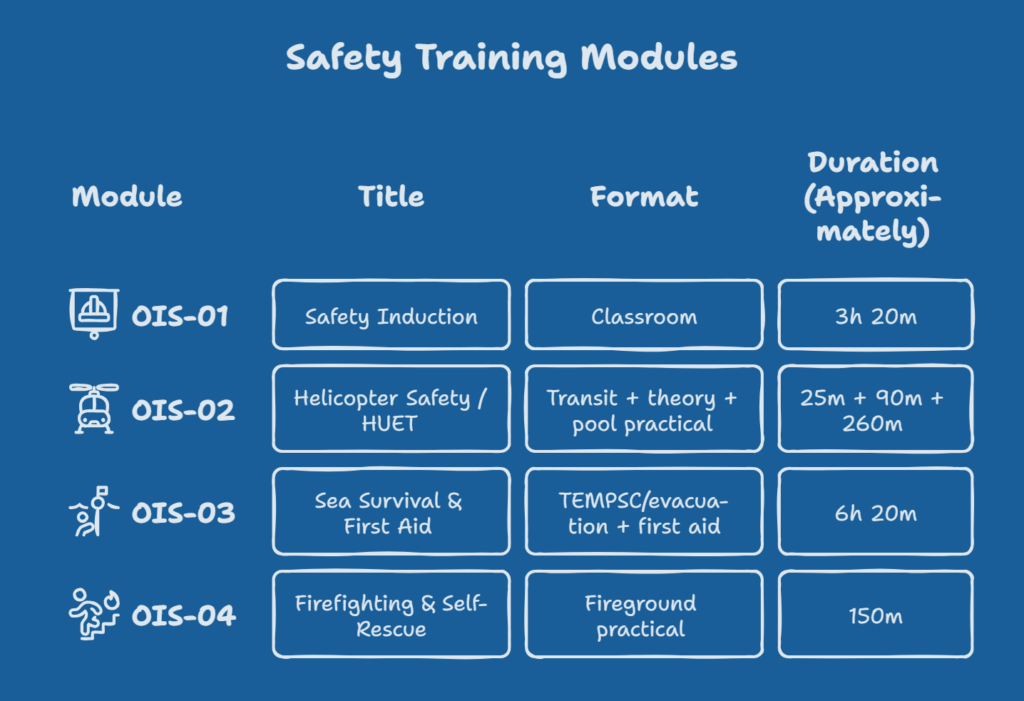
OIS-01 Safety Induction

Now, this is where the course baseline begins. Trainees learn the hazard categories they’ll face offshore, the reporting chain, and what’s expected of them the moment they step onto a platform. It’s classroom-based because it has to be; this is foundational knowledge, not a physical skill. Pass means the trainee can identify a hazard and knows exactly who to tell and how fast.
OIS-02: Helicopter Safety / HUET
Three phases, back-to-back: transit briefing, theory, then the pool practical. The theory covers brace positions, exit procedures, and equipment use. The pool practical is where it gets tested: submerged, disoriented, finding the exit under controlled conditions. That 260-minute practical block isn’t padding. Underwater egress is a skill that has to be drilled, not just explained. We cover HUET equipment in more depth in a dedicated breakdown if you want the full spec on what’s used in the tank.
OIS-03: Sea Survival & First Aid

The longest single module, and for good reason. This covers TEMPSC evacuation, life raft procedures, and first aid you’d realistically need to administer before help arrives. Passing here means a trainee can get themselves and someone else through an evacuation sequence without freezing up. We go deeper on TEMPSC types in a separate piece worth a read if your crew’s platform uses a specific craft type.
OIS-04 Firefighting & Self-Rescue

Fireground practical, full stop. Trainees work with actual fire and actual extinguishing equipment under instructor supervision. This is the module that separates “I read about it” from “I’ve done it.” Passing means the trainee can execute a self-rescue and fight a fire they’re realistically likely to encounter.
Here Are the Ratios We Use and Why They’re Not an Afterthought
Instructor Ratios at NOIAA
16:1 theory
4:1 practical
16:1 HUET demonstration
A room of 40 watching one HUET demo teaches nothing you can test. A 4:1 practical ratio means an instructor is actually watching your trainee’s exit technique, not just the general vicinity.
Personal Experience
OIS-04 doesn’t look the way people picture it before they show up.
Most trainees expect a demo. What they get is a live fire, real extinguishing equipment, and an instructor standing close enough to stop things going wrong, but not close enough to do it for them.
That’s the part that changes how people carry themselves for the rest of the course. Once you’ve fought an actual fire under supervision, the classroom modules stop feeling like theory.
The pool practical in OIS-02 trips people up in a different way. It’s not the swimming. It’s the disorientation inverted, submerged, having to find an exit by feel instead of sight. That’s exactly why the 260-minute block exists. You don’t get that skill from a briefing.
The 4:1 ratio is where the difference between “watched a demo” and “can do it” actually shows up. In a 16:1 room, an instructor can confirm everyone was present. In a 4:1 practical group, they can confirm everyone can execute the exit and correct the ones who can’t, on the spot, before it becomes a habit.
Conclusion
Now that you have read what is actually broken down, you know what you’re approving before you approve it. That’s the whole point of this breakdown.
If your training date is coming up, now is a good time to book it.
Not sure if you need BOSIET or HUET? Or worried about the cost? Our comparison guide explains which fits your needs. Read it before you send the numbers to your finance team.

You may also like